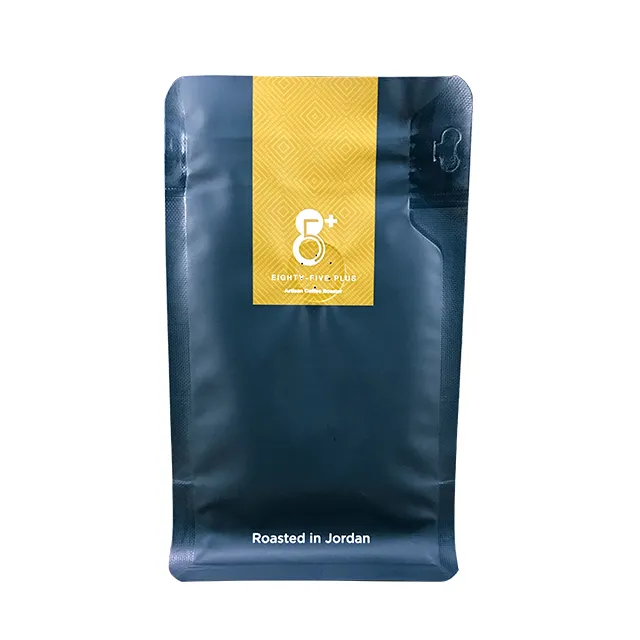
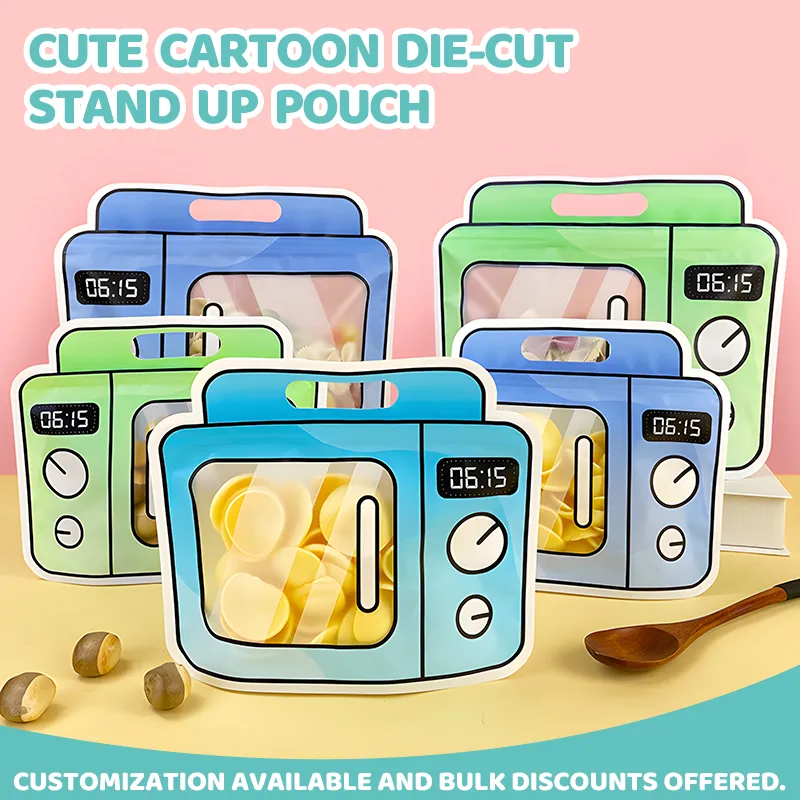
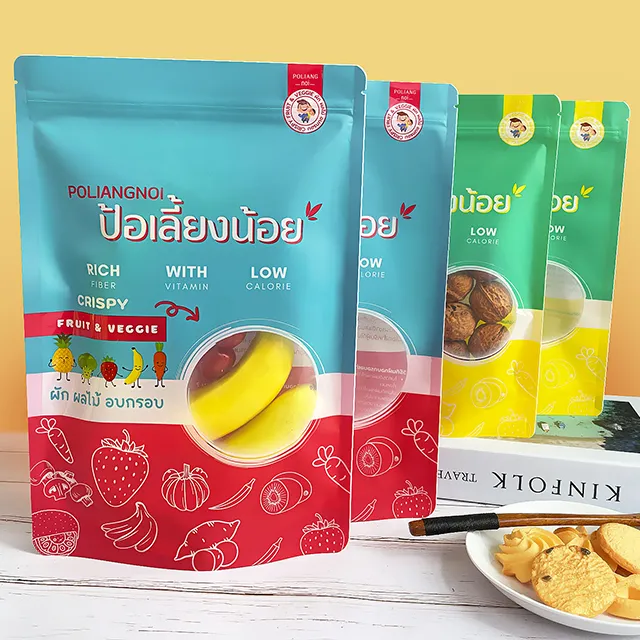
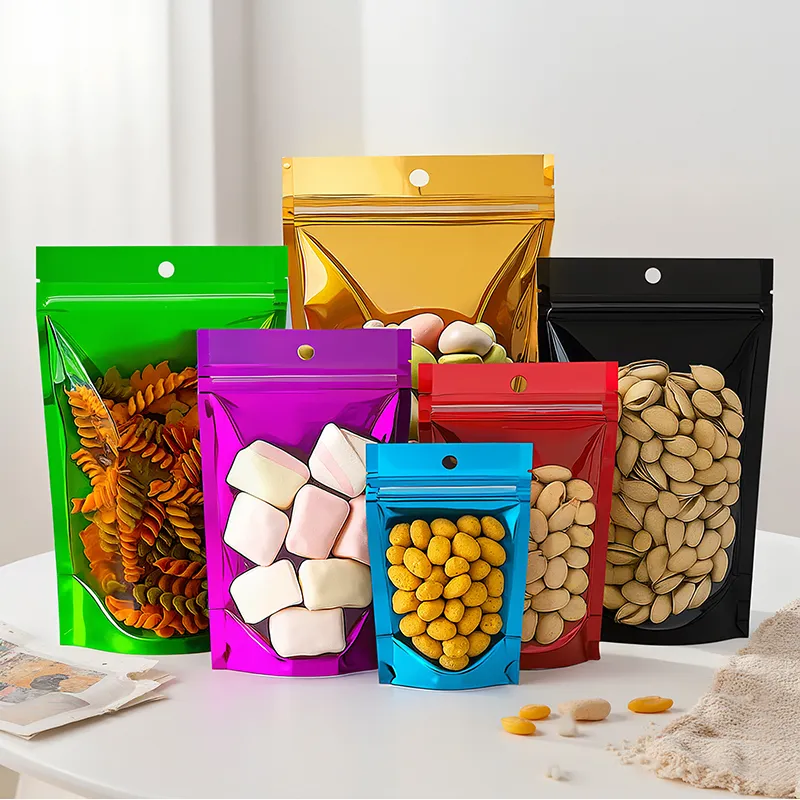
A pouch with window gives buyers a practical way to show the product inside while keeping the packaging structure and branding visible. For importers, wholesalers, food manufacturers, and private-label brands, choosing the right window design involves more than appearance. A pouch with window should be assessed for both product presentation and packaging performance. The window size, pouch format, laminate structure, and product requirements all affect the final packaging choice.
This guide compares half-window and full-window designs, explains which pouch styles can incorporate a viewing window, and outlines what B2B buyers should check before placing a wholesale order.
What Is a Pouch with Window?
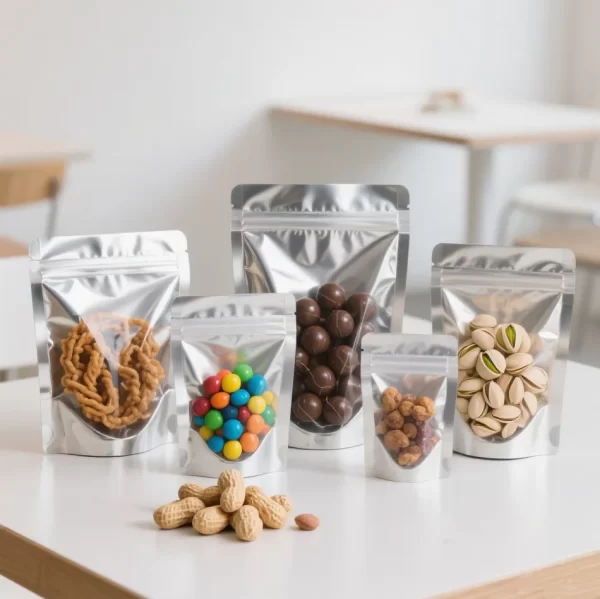
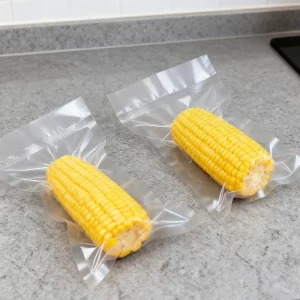
A pouch with window is a flexible package that includes a transparent section so customers can see some or all of the product inside. The rest of the pouch can be printed, opaque, or made with a different material layer, depending on the design and packaging requirements.
A window can be incorporated into several pouch formats, including stand-up pouches, three-side-seal bags, flat-bottom bags, and side-gusset bags. The window may be positioned on the front panel, back panel, or another suitable area. Its shape and size can be selected according to the product, artwork, and packaging structure.
For wholesale packaging buyers, the key point is that window design and pouch structure are separate decisions. A pouch with window can be developed in different formats, so buyers should not assume that the window determines the bag style. A buyer can often evaluate the pouch format first, then determine whether a partial or larger transparent area is appropriate.
Half Window vs. Full Window Bags
The main difference between half-window and full-window designs is the size of the transparent viewing area.
Half Window Bags
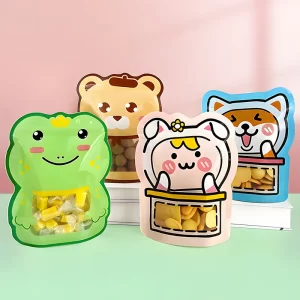
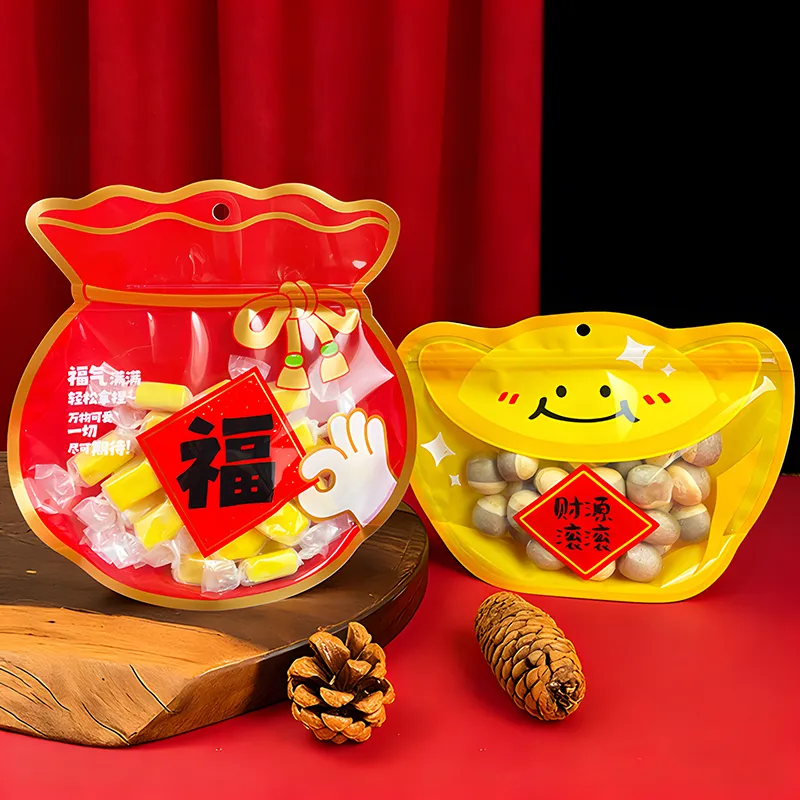
A half-window design has a transparent section across part of the pouch panel, while the remaining area provides space for branding, product information, and other printed details.
Potential advantages include:
- A balance between product visibility and printed branding.
- More opaque surface area for logos, product details, and retail graphics.
- The option to limit the transparent area when the product is sensitive to light, subject to the actual laminate structure.
- Flexibility in window shape and placement, depending on the pouch design.
Half-window packaging may suit products where buyers want customers to see the contents without giving up too much space for brand communication. The exact window size should be considered alongside label requirements and the available printable area. When sourcing a pouch with window, buyers should compare the usable print area as well as the visible product area.
Full Window Bags
A full-window design uses a much larger transparent area, often covering most or all of one pouch face. In the type discussed in this guide, one complete panel is transparent while the opposite panel can remain printed or opaque.
Potential advantages include:
- A larger view of the product inside.
- Strong product visibility for items whose color, texture, or appearance supports the purchase decision.
- A clean display that can help buyers distinguish product varieties.
- A useful option when the product itself is an important part of the visual presentation.
A full-window pouch does not necessarily mean the entire bag is transparent. It can refer to one full panel being transparent, with the other panel retaining printed or barrier layers. Buyers should confirm the construction with the packaging supplier. This is particularly important when a pouch with window is intended for products that require light or moisture protection.
Pouch Styles That Can Include a Window
A window is a design feature, not a pouch format on its own. Different bag structures can be made with viewing windows, subject to the converter’s equipment, material combinations, and product specifications.


Stand-Up Pouches with Windows
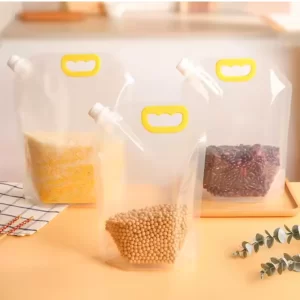
Stand-up pouches are designed with a bottom gusset that allows the bag to stand on a shelf. A front or back window can provide product visibility while the remaining panel carries branding and product information.
This format is commonly considered for snacks, nuts, dried foods, confectionery, and other retail products. Buyers should check the required fill weight, pouch dimensions, closure options, and shelf presentation before choosing a design.
Three-Side-Seal Bags with Windows
Three-side-seal bags have sealed edges on three sides and are often supplied as flat pouches. A window can be added to a suitable panel to display the contents.
This format may be considered for single-use portions, small food products, samples, and other applications where a compact package is needed. The window position should not interfere with the sealing area or the product’s required protection.
Flat-Bottom Bags with Windows
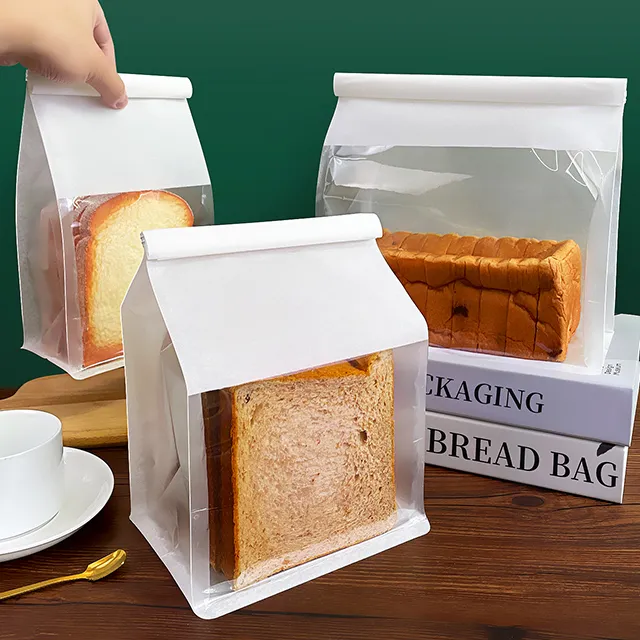
Flat-bottom bags have a stable base and multiple panels, offering useful space for product information and branding. A window can be incorporated into a front or side panel, depending on the bag construction.
For buyers sourcing flat-bottom packaging, it is important to confirm the finished bag dimensions, panel layout, gusset structure, and window position. The terms flat-bottom bag and box-bottom bag may be used differently by suppliers, so request a drawing or sample when the exact structure matters.
Side-Gusset Bags with Windows
Side-gusset bags expand at the sides when filled, providing capacity while maintaining a relatively compact front profile. A viewing window can be positioned on a front panel or another suitable area, depending on the design.
This format may be suitable for products such as coffee, dry foods, and bulk ingredients, but the material structure must match the product’s shelf-life and storage requirements. Do not assume that every side-gusset bag includes a degassing valve or the same barrier performance.
Kraft Paper and Mylar Window Bags
Material selection is another important part of sourcing window packaging. The right pouch with window must use a laminate suited to the product and its storage conditions. Kraft paper and Mylar-style laminated structures are two terms buyers may encounter when comparing products.

Kraft Paper Bags with Windows
Kraft paper bags with windows combine a paper-based outer appearance with a transparent viewing area. They can be considered when a natural or understated packaging look is important.
However, kraft paper alone does not provide all the barrier properties required for every product. Many flexible packaging bags use a multi-layer construction that may include inner polymer or barrier layers. Buyers should confirm the actual material composition, food-contact suitability, moisture resistance, and sealing performance with the supplier.
Mylar Bags with Windows
Mylar is commonly used as a market term for certain polyester-based flexible packaging films and laminated bags. A Mylar bag with a window may combine an opaque or metallized area with a transparent section.
The performance of the finished pouch depends on the complete laminate, including the transparent window material and how it is joined to the rest of the structure. Buyers should request the material specification and relevant test information rather than assuming that every Mylar-style bag offers the same oxygen, moisture, or light barrier.

How to Choose the Right Window Design
When selecting a pouch with window for a product line, wholesale buyers should assess the product, packaging function, and retail presentation together. The same pouch with window design may not be suitable for every product category.
1. Consider Product Visibility
Ask how much of the product customers need to see to make a purchase decision. Products with distinctive shapes, colors, or textures may benefit from a larger window. If only a quick view is needed, a smaller window may leave more room for branding and required information.
2. Check Light and Barrier Requirements
Some products are sensitive to light, oxygen, or moisture. A larger transparent area may change the package’s overall protective performance, but the result depends on the transparent film and the full laminate structure. Share the product type and expected storage conditions with the packaging supplier before confirming the specification.
3. Match the Window to the Pouch Format
The pouch format should suit the filling method, product volume, storage, and display requirements. Stand-up, three-side-seal, flat-bottom, and side-gusset formats have different panel layouts and sealing areas. Confirm that the proposed window location works with the chosen structure.
4. Leave Enough Space for Branding and Compliance Information
Packaging may need space for a logo, product name, ingredients, barcode, handling instructions, and other market-specific information. Check the artwork layout before deciding on the window dimensions. Importers and private-label buyers should also confirm the applicable labeling and food-contact requirements for their target market.
5. Request Samples and Specifications
Before ordering a pouch with window in bulk, ask for samples or a technical drawing showing the pouch dimensions, window dimensions, material layers, seal areas, and closure details. If the product has specific shelf-life requirements, discuss the necessary barrier performance and request supporting documentation where available.
What Wholesale Buyers Should Confirm Before Ordering
For B2B packaging procurement, the right design is only one part of the decision. Buyers should also confirm the following details with the flexible packaging supplier:
- Pouch format: stand-up, three-side-seal, flat-bottom, or side-gusset.
- Window design: partial window or one full transparent panel.
- Material structure: paper-based, polyester-based, metallized, or other specified laminate.
- Pouch dimensions and capacity: based on the product’s actual filling volume and weight.
- Closure and sealing: zipper, heat-seal requirements, tear notch, or other available features.
- Printing and information area: space for branding, barcode, and required product details.
- Food-contact documentation: confirm suitability for the intended application and destination market.
- Order terms: minimum order quantity, stock availability, mixed-SKU options, lead time, and shipping arrangements.
If you are sourcing wholesale ready-stock packaging bags, ask the supplier which window designs and pouch formats are currently available. Stock options can differ in size, material, and construction, so confirm the exact specification rather than assuming every design is available from inventory.
자주 묻는 질문
What is the difference between a half-window and a full-window pouch?
A half-window pouch has a transparent section on part of a panel. A full-window design uses a larger transparent area, often covering one complete panel. The exact construction should be confirmed with the supplier.
Do window pouches protect products from moisture and oxygen?
They can, but performance depends on the complete material structure, including the transparent film, barrier layers, seals, and pouch construction. Ask the supplier for specifications relevant to your product.
Can different pouch styles have transparent windows?
Yes. Depending on the manufacturer’s capabilities and the packaging design, windows may be incorporated into stand-up pouches, three-side-seal bags, flat-bottom bags, and side-gusset bags.
Are kraft paper window bags suitable for food packaging?
Some are designed for food packaging, but suitability depends on the inner layers, adhesives, inks, and food-contact compliance. Confirm the material structure and documentation for the intended food application.
What should importers check before placing a bulk order?
Importers should confirm the pouch format, window dimensions, material specification, product compatibility, order quantity, stock status, lead time, and shipping terms. Samples are useful for checking appearance and practical fit before a larger purchase.
결론
Window packaging gives brands and product manufacturers a way to display contents while retaining space for branding and product information. A well-specified pouch with window can support both shelf presentation and practical product packaging. Half-window designs provide a balance between visibility and printed area, while full-window designs place greater emphasis on showing the product. Neither option is automatically better; the right choice depends on the product, required protection, and presentation goals.
For wholesalers, importers, and private-label businesses, it is also important to choose the right pouch structure. Stand-up, three-side-seal, flat-bottom, and side-gusset bags can all be considered where the design and manufacturing process allow. Confirm the material construction, window specifications, and order details with your packaging supplier before purchasing in bulk.
About Leibei Packaging
Leibei Packaging supplies flexible packaging bags for business buyers looking for practical packaging options across different product categories. Whether you are comparing window designs or sourcing stand-up pouches, flat-bottom bags, three-side-seal bags, and other flexible packaging formats, our team can help you check available styles, material specifications, sizes, and wholesale order details.
Contact Leibei Packaging to discuss your packaging requirements and explore suitable wholesale ready to ship pouches or other available packaging options.